
Vitalwalk Walking Pad Review: The One That Actually Feels Built to Last
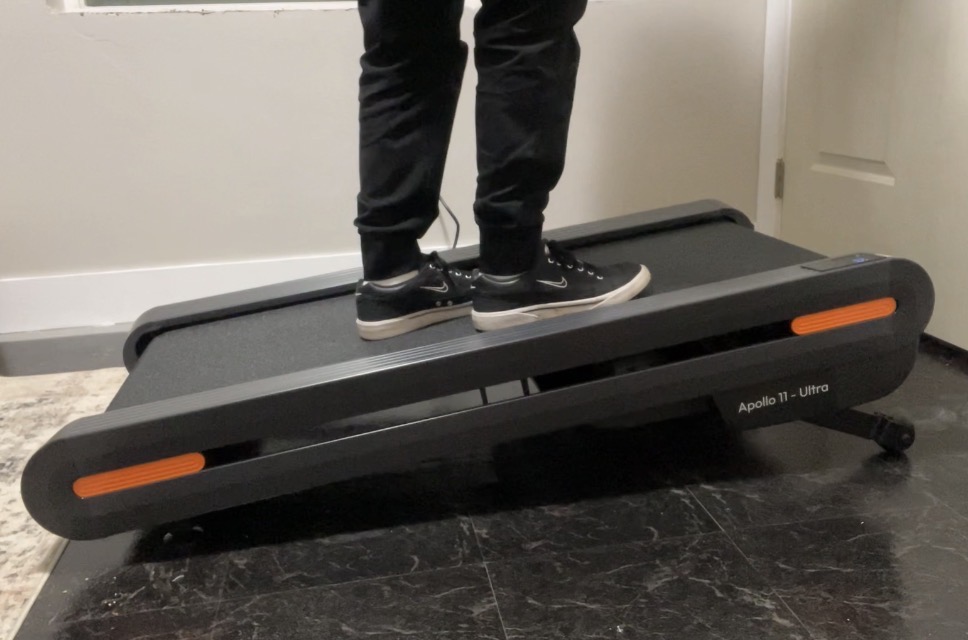
Here’s the thing about shopping for walking pads on Amazon: they all start to look the same. Same specs, same features, same five-star reviews that sound suspiciously like they were written by the same person. “12% incline!” “350 lb capacity!” “Whisper quiet!” Everyone says it.
The problem? A lot of them feel like plastic toys when they show up at your door. Flimsy decks. Wobbly frames. Motors that sound like they’re about to give up in week two.
I got to spend real time with the Vitalwalk Walking Pad and the thing that stood out most to me wasn’t the feature list — it was how solid it actually feels compared to the other walking pads I’ve seen. Here’s my honest take.
TL;DR — The quick verdict
Buy this if: You’ve been burned by cheap walking pads before and want something built to actually last. You work from home or sit at a desk for most of the day. You want a walking pad that doesn’t feel like it’s going to flex under you.
Skip this if: You’re on a strict budget under $300, you just need something cheap for occasional slow-walking, or you want a compact unit for a tiny space.
My rating: 4.5 out of 5. Build quality alone makes this one of the more trustworthy picks in the Amazon walking pad chaos.
 Check current price on Amazon
Why build quality matters more than you think
It’s easy to look at a $200 walking pad and a $400 walking pad on Amazon and think “they have the same specs — why pay more?”
Here’s why: a walking pad is essentially a motor, a belt, and a deck, all working under the weight of a moving human for potentially hundreds of hours a year. Every component matters. A cheaper unit might look identical in photos but cut corners on:
- Deck thickness (thin decks flex with each step, stressing the motor)
- Motor housing (plastic shells crack and warp over time)
- Belt quality (cheap belts stretch, slip, or fray within months)
- Frame construction (lightweight frames wobble and rattle)
These aren’t things you see in the spec sheet. You only notice them when something breaks — or when you stand on the thing for the first time.
First impressions and setup
Box is heavy. Around 75 lbs. That was actually my first clue this thing was built differently — a lot of budget walking pads weigh 45-55 lbs because they’re using lighter materials. Weight usually correlates with build quality on equipment like this.
Setup took me about 8 minutes. Unfold, plug in, done. It comes pre-assembled. The remote paired instantly.
When I stepped on it for the first time, the deck didn’t flex. That’s the first thing I test on any walking pad — you can feel the difference immediately between a deck that’s built solid and one that’s got cheap materials underneath. The Vitalwalk feels planted.
What stood out after 4+ weeks of use
1. The build quality holds up
This is the main reason I’d recommend it. After weeks of daily use, there’s no creaking, no deck flex, no weird motor sounds developing over time. A lot of cheaper walking pads start getting “noisy” within a month — bearings loosen, plastic parts start rubbing. This one still feels exactly like it did on day one.
The 350 lb weight capacity tells you something too. That’s well above the 220-265 lb capacity most walking pads list. Manufacturers rate capacity based on what the frame and motor can handle — a higher number means beefier internals. Even if you weigh nowhere near the limit, that extra margin means the unit isn’t working at its max every time you use it.
2. The deck size fits actual adults
18 inches wide by 43 inches long. Most cheaper walking pads use a 16″ x 40″ belt, which is fine if you’re short or shuffling, but if you’re over 5’10” with any kind of normal stride, your heels start hitting the back.
The Vitalwalk is the first walking pad I’ve tried where I completely forget I’m on a walking pad — the belt is long enough to walk normally on.
3. No motor hood, no tripping
Most walking pads stick the motor in a bulky hood at the front, so there’s a raised lip you have to step over when getting on and off. The Vitalwalk puts the motor under the deck, so the surface is flat front to back.
Sounds small. It’s not. When you’re half-distracted answering a message or helping a kid find a shoe, not having a lip to catch your foot on matters. This is the kind of design choice that tells you the brand actually thought about how people use these things.
4. Nap-time test
Ran it during my kid’s afternoon nap — one room over from where they sleep. At 2–2.5 mph, it’s quiet. Not silent, but “quiet dishwasher” level — not disruptive. Motor gets slightly louder above 3 mph, but nothing that would wake a sleeping kid in the next room.
If you’re in an apartment with thin ceilings, your downstairs neighbor will probably hear it. For most houses, it’s fine.
5. Upright storage is legitimately useful
When I’m not using it, I tilt it on its end and roll it against the wall. Takes up about the footprint of a nightstand. If you work from a small home office or apartment, that flexibility is huge.
What I don’t love
I promised honest, so here are my real gripes:
The remote is small and easy to lose
I’ve hunted for it under my desk multiple times. It needs a clip, a magnetic mount, or at least a bright color. A small gripe, but annoying.
Starting speed is 0.6 mph
If you want a super-slow stroll during a call — like 0.3-0.5 mph — you can’t. It starts at 0.6 and goes up from there. For me it’s fine, but worth knowing.
No handrails
Some people will want them. I don’t miss them, personally — walking without holding on feels more like real walking. But if you rely on handrails for balance, this isn’t the right model for you.
Who this is perfect for
 People who’ve been burned by cheap walking pads and are ready to spend a bit more for something that lasts Work-from-home parents who plan to use it daily Taller adults who need a longer belt Anyone over 200 lbs — the 350 lb capacity means the motor isn’t maxed out People who need storable equipment for small spaces
Who should skip it
 Strict budget shoppers — there are cheaper walking pads under $300 if you don’t mind lower build quality Runners — this maxes out at walking speeds People who need handrails Anyone in a situation where noise truly can’t happen (nursery directly below, very thin apartment floors)
The real verdict
I think the honest pitch for the Vitalwalk is this: it’s not the cheapest walking pad on Amazon, but it’s one of the few I’ve seen that actually feels built to survive daily use.
Most of the cheap walking pads on Amazon are designed to be bought and returned — they look okay in photos, they hit the low price point, and by the time they start falling apart, the return window is closed. The Vitalwalk feels like it was designed to actually be used for years, not just to hit a price point.
If you’re someone who’d rather spend a little more once than cheap out and replace it in a year, this is the kind of walking pad worth considering.
Should you buy it?
If build quality matters more to you than saving $100, yes. If you just want the cheapest walking pad you can find, look elsewhere — but know that you’re probably going to be replacing it sooner.
Questions about the Vitalwalk or want help deciding between walking pads? Email me at busyparentgym@gmail.com — happy to help.